
English| USD
Suggested for you
More currencies
Choose a language
Fez's pottery studios in the Fekharine district remain one of the few places in Morocco where you can watch traditional ceramics production unfold in real time. This guide covers opening hours, workshop fees, arrival timing, and what to expect when you visit Art Nakhil and neighboring kilns.
Quick answer
The pottery workshop in Fez opens daily from 08:00 to 18:00 at Ain Nokbi, Fekharine. Entry to view pottery production is free; hands-on workshops are priced per activity and must be arranged in advance. Arrive between 08:00 and 11:00 to avoid midday heat and afternoon tour groups, when studio space becomes crowded and artisans pause for lunch.
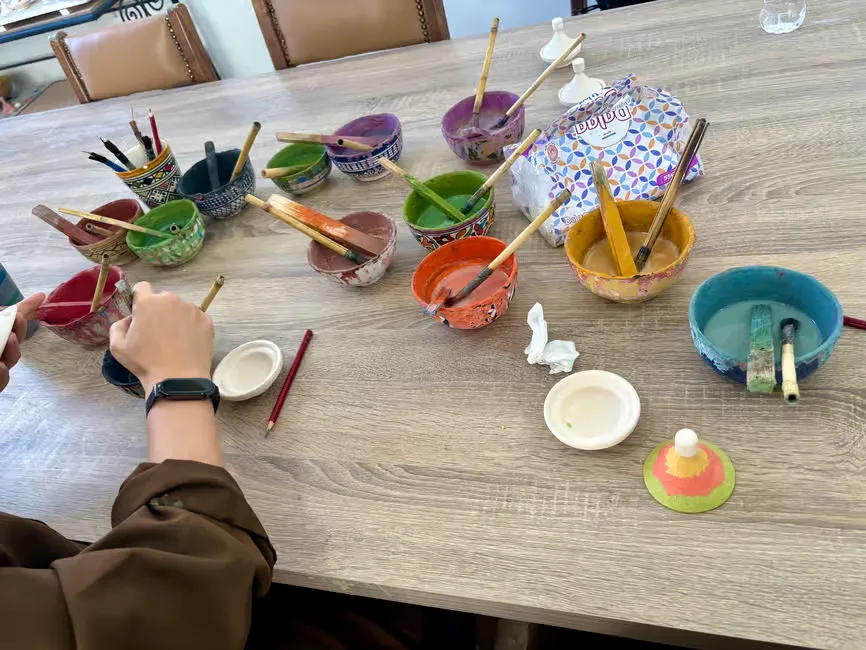
Fez produces more hand-thrown pottery than any other Moroccan city, and nearly all of it originates in a single neighborhood. The Fekharine quarter, wedged between the medina walls and the Oued Fez riverbank, has hosted ceramic workshops for more than seven centuries. Today the kilns at Ain Nokbi remain in continuous operation, firing cobalt-blue zellige tiles and terracotta tagines in wood-fueled ovens that predate the Saadian dynasty. A pottery workshop Fez visit typically begins with a walk through the drying yards, where rows of unfired vessels sit on wooden pallets under open sky. Artisans shape clay on kick wheels, their hands coated in slip the color of wet sand. The process moves slowly: a single platter may pass through six hands before it reaches the kiln. Visitors are welcome to observe each stage, from wedging the raw clay to applying the signature Fassi glaze patterns in mineral pigment. Most studios offer hands-on sessions where you work alongside a master potter to throw a bowl or plate on the wheel. Workshops are structured as private or small-group sessions rather than scheduled classes, so advance contact through the studio's official site ensures availability. The ceramic traditions here differ from those in Safi or Salé; Fez potters favor finer-grained clay dug from quarries near Sefrou, and their glazes rely on cobalt, manganese, and antimony rather than the brighter enamels used elsewhere in the country. The result is a palette of deep indigo, olive green, and amber that has defined Moroccan tile work for generations. Timing matters. Mornings see the kilns stoked and the wheels in motion; by early afternoon, artisans break for the midday meal and tour groups from Marrakech arrive in overlapping waves. The studios remain open until 18:00, but the workspace quiets considerably after 15:00. If you plan to participate in a hands-on session, request a morning slot when the clay is fresh and the potter's attention is undivided. The Fekharine district sits a twenty-minute walk from Bab Boujloud, accessible by petit taxi or on foot through the tannery quarter.
“Fez potters favor finer-grained clay dug from quarries near Sefrou, and their glazes rely on cobalt, manganese, and antimony rather than the brighter enamels used elsewhere in the country.”
The pottery workshops in Fez are open daily to accommodate visitors throughout the week. You may plan your visit on any day from Monday through Sunday.
The best arrival window is 08:00–11:00 to avoid mid-day heat and large afternoon tour groups. Planning your visit during these morning hours ensures a more focused experience.
Mild temperatures (15°C–25°C)
Pleasant conditions for outdoor kiln work and workshops.
Mild temperatures (16°C–26°C)
Cooler air makes working with clay more comfortable.
—
Ideal time to observe production without peak congestion.
Verdict: The best slot is weekday mornings between 08:00 and 11:00 during the months of April or October.
Admission to the pottery facility for observing production is free of charge. Participation in hands-on pottery workshops requires payment based on the specific activity selected.
Verdict: Visitors pay 0 MAD to enter the premises, with additional costs applicable only when participating in hands-on workshops.
The pottery workshops are located in the Ain Nokbi district, a dedicated craft area situated outside the primary gates of the Fez medina. The most direct approach is via taxi or private car.
Direct transfer to Ain Nokbi, Fekharine
Drive via Route de Sidi Harazem to Ain Nokbi
Not recommended due to distance from medina gates
When taking a taxi, request the driver take you directly to the Ain Nokbi pottery complex to ensure you are dropped at the correct cluster of workshops.
Practical guidance to help you engage effectively with traditional ceramic techniques during your visit to the workshop.
Observe the artisans before starting your own piece to understand the specific pressure required for Fez clay. You may ask to watch a demonstration of the turning process to see how they achieve the characteristic thin walls of local pottery.
Expect to get clay on your hands and clothes, so wear items you do not mind staining. Simple cotton clothing is recommended as it breathes well during the physical process of working the wheel.
Pottery throwing requires significant practice, so focus on the experience of handling the raw material rather than the final shape of your vessel. The clay used in Fez has a unique texture that reacts quickly to moisture, so keep a sponge handy to manage its consistency.
Inquire about the source of the local clay and the levigation process used to remove impurities. Understanding the raw material preparation provides context for why the final fired products possess their specific durability.
Feel free to take photos of your progress, but always ask the artisan for permission before capturing their portrait or their personal work station. This respects the craftsmanship and maintains the professional environment of the workshop.
Everything you need to know about pottery workshop fez
Viewing the pottery production is free of charge, though a pottery workshop Fez requires payment per activity. You can inquire about specific activity costs directly through the official site.
The facility is open daily from 08:00 to 18:00, including weekends. This provides consistent access for those planning a visit to see the artisans at work.
To avoid the mid-day heat and large afternoon tour groups, the best arrival window is 08:00–11:00. Arriving early ensures a calmer experience while engaging in your pottery workshop Fez.
Yes, families are generally welcome to observe or participate in a Fez ceramic workshop, provided they are supervised. It is a practical way to learn about the local blue-and-white cobalt glaze techniques.
The workshop is situated at Ain Nokbi, Fekharine, Fez, Morocco. This area is known for its concentration of traditional ceramicists and kilns.
You can organize your participation in a pottery workshop Fez by visiting the official website provided. The contact phone number is also available for direct inquiries regarding scheduling.